Imagining and Reimagining Limerick’s relationship with the Irish harp.
The harp is one of Ireland’s most recognisable symbols. It appears on our coins, official documents and, perhaps most famously, the Guinness logo. Yet, despite its prominent place in our national identity, I am still struck by how often people tell me that they have never seen or heard the Irish harp played live. This…
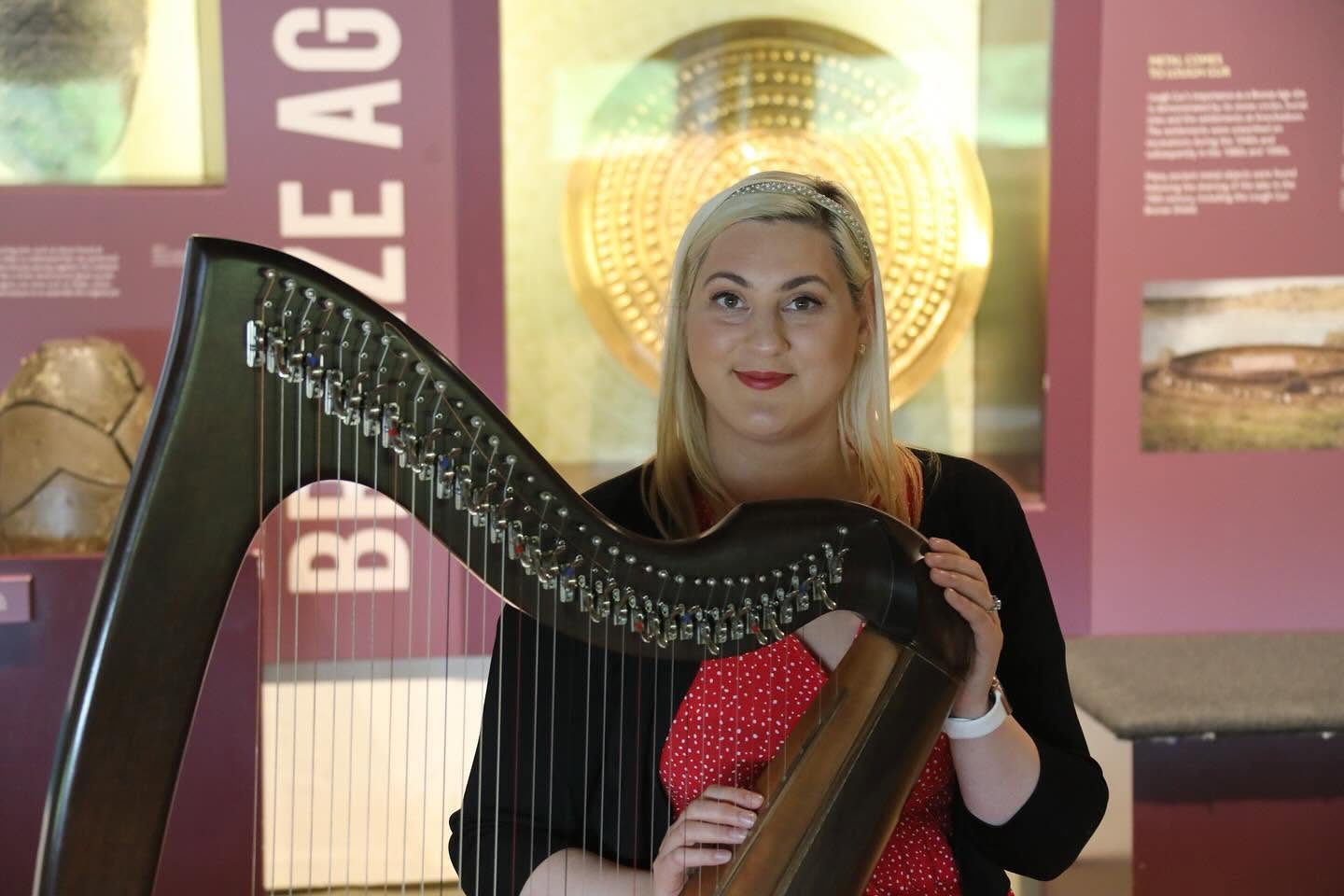
The harp is one of Ireland’s most recognisable symbols. It appears on our coins, official documents and, perhaps most famously, the Guinness logo. Yet, despite its prominent place in our national identity, I am still struck by how often people tell me that they have never seen or heard the Irish harp played live.
This observation became the starting point for my research project, undertaken with the support of the Comhaltas Ceoltóirí Éireann Ashling Scholarship. The project set out to explore Limerick’s historical connections with the Irish harp, bringing together stories that deserve to be better known and finding new ways to share them with the wider community.
As someone from Castleconnell, County Limerick, with a lifelong connection to traditional Irish music, this was a particularly meaningful project to undertake. With two aunts who are All-Ireland champion harpers, the harp has always been part of my own musical landscape. I wanted to explore how its history was woven into the cultural fabric of the place I call home, and how that history could be brought to life for people who might not otherwise encounter it.
Uncovering Limerick’s Harping History
Limerick has a fascinating, and perhaps underappreciated, connection with the Irish harp. My research explored the lives, journeys and musical legacies of historical harpers whose stories intersect with the county, revealing a rich cultural heritage that extends far beyond the instrument’s familiar national symbolism.
One of the most intriguing figures was Arthur O’Néill (c. 1734–1816), the blind harper whose memoirs recount a remarkable procession through the streets of Limerick. At the request of Counsellor MacNamara, then Recorder of Limerick, O’Néill paraded through the city playing the Brian Boru Harp, now housed in Trinity College Dublin. In his memoirs, he describes being followed by a procession of more than 500 people. It is a striking image: the harp not simply displayed as an emblem, but heard in the streets and celebrated by a large public gathering. The story also raises fascinating questions about the harp’s journey through history, including the little known piece of information that the Trinity College Harp now in the National Library in Dublin, also known as the Brian Boru Harp has a connection with Castleconnell.
Another important figure was Thomas Connellan, the Sligo harper and poet who died in 1698. His final resting place is at Lough Gur, County Limerick and his connection to the area offers another thread in the wider story of the movement of harpers, their music and their legacies across Ireland.
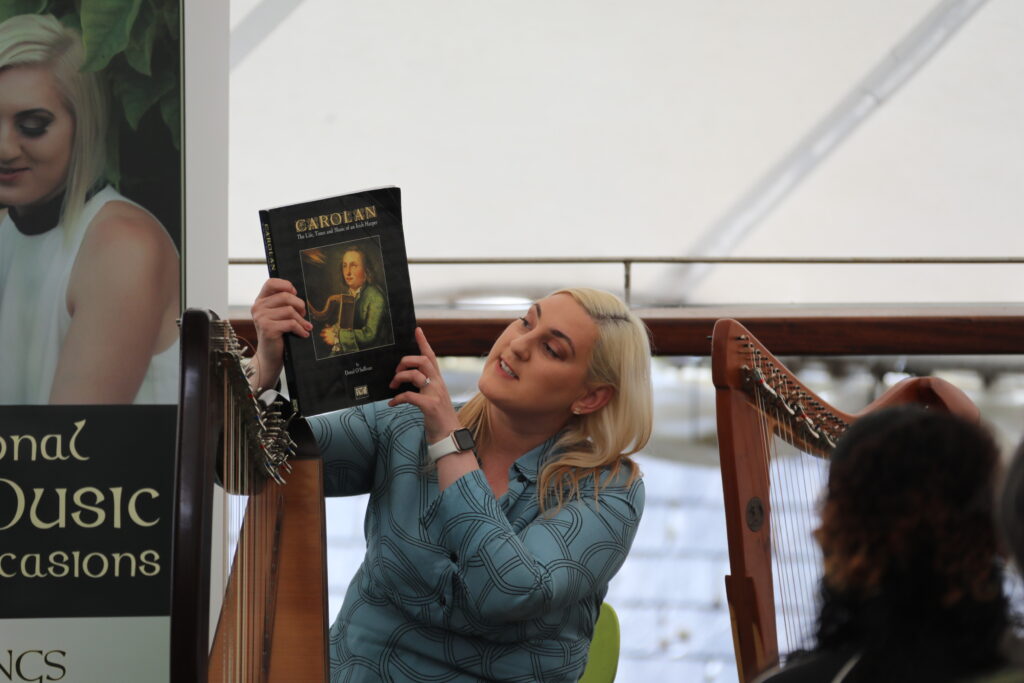
I also revisited the story of Turlough O’Carolan (1670–1738), the celebrated travelling harper and composer who regularly visited Charles Dean Massy of Limerick (1697–1766). Massy was responsible for the only known portrait of O’Carolan painted from life, created at his home in Doonass, County Clare. Today, that portrait hangs in the National Gallery of Ireland.
These are just some of the remarkable connections that place Limerick firmly within Ireland’s harping history. They remind us that our local heritage is not separate from the national story but an essential part of it.
Bringing the Stories Together
Although information about these historical figures already exists in published literature, archival collections and historical accounts, the connections between Limerick and the harp have not always been presented together in one accessible place. A central aim of the project was therefore to bring these narratives together, exploring existing research while investigating further historical references and local connections. Conversations with local historians, folklorists and others with knowledge of the area provided a valuable starting point for examining the literature and identifying avenues for further investigation.
Resources such as the Irish Traditional Music Archive, the Irish World Academy of Music and Dance at the University of Limerick, and the Special Collections and Archives at Queen’s University Belfast offered important avenues for exploring the harp’s historical footprint. By bringing these stories together, the research sought to create a clearer picture of Limerick’s contribution to Ireland’s harping tradition and provide a resource for researchers, musicians, harp enthusiasts and the wider public.
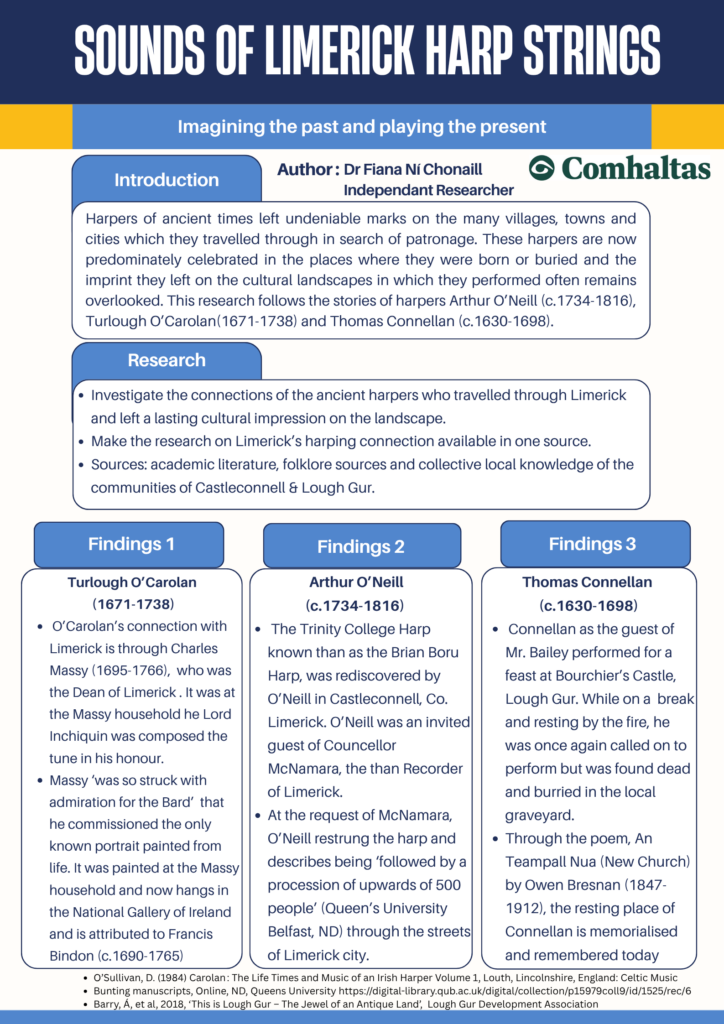
Research alone was never the ultimate goal. I wanted these stories to be heard, enjoyed and carried forward. An important part of this project was making the research accessible beyond academic circles. The accompanying academic poster offers an introduction to the work, presenting key themes and historical connections that illustrate Limerick’s rich relationship with the Irish harp.
Explore the academic poster below to discover more about Limerick’s harping heritage.
The full written research account is yet to be published. Further details will be shared when it becomes available.
The poster provides a starting point for anyone interested in discovering more about the historical harpers associated with Limerick and the important place of the harp in Ireland’s musical and cultural history. I hope it will encourage readers to explore these stories further and to consider the many ways in which local histories contribute to our understanding of Ireland’s wider musical heritage.
Taking the Harp into the Community
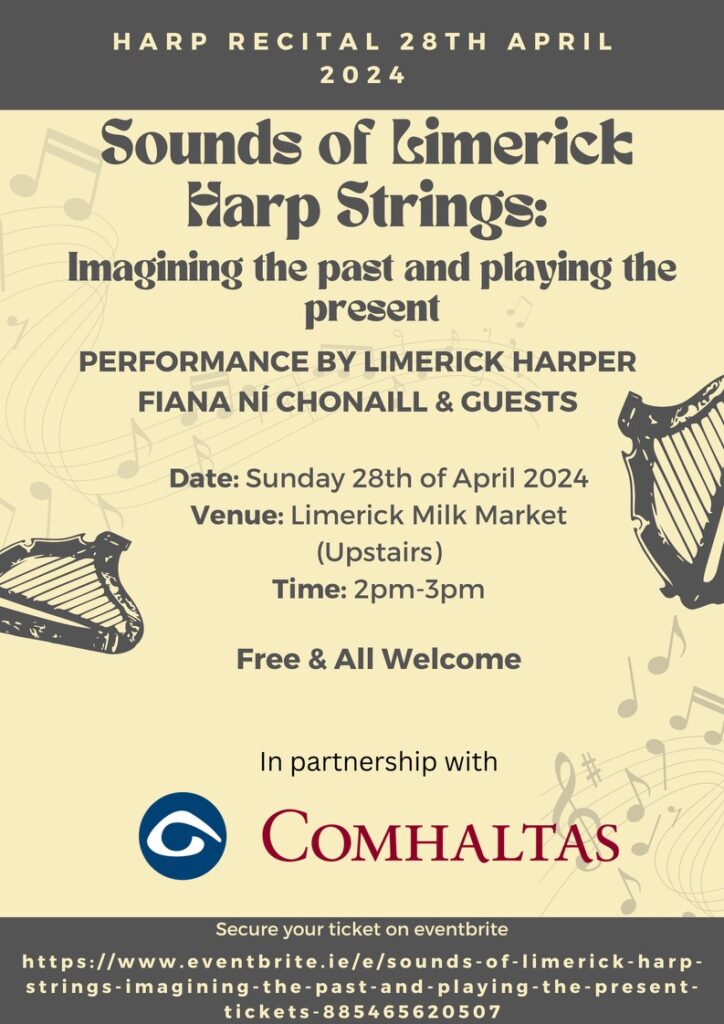
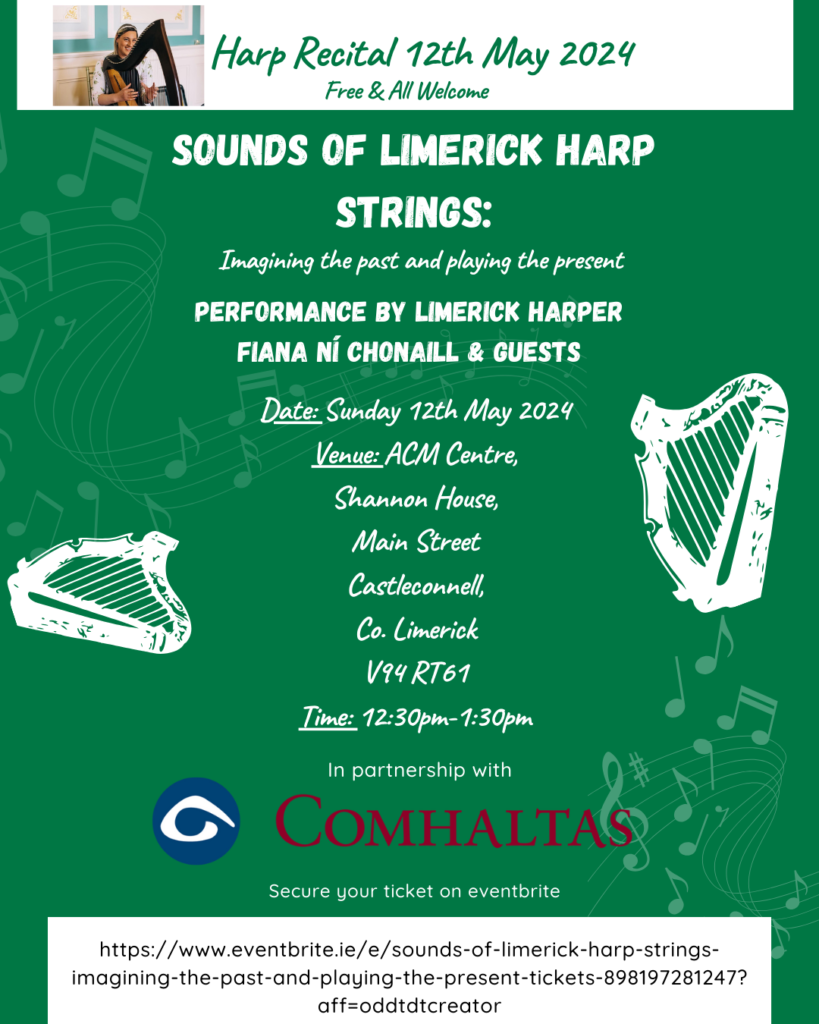
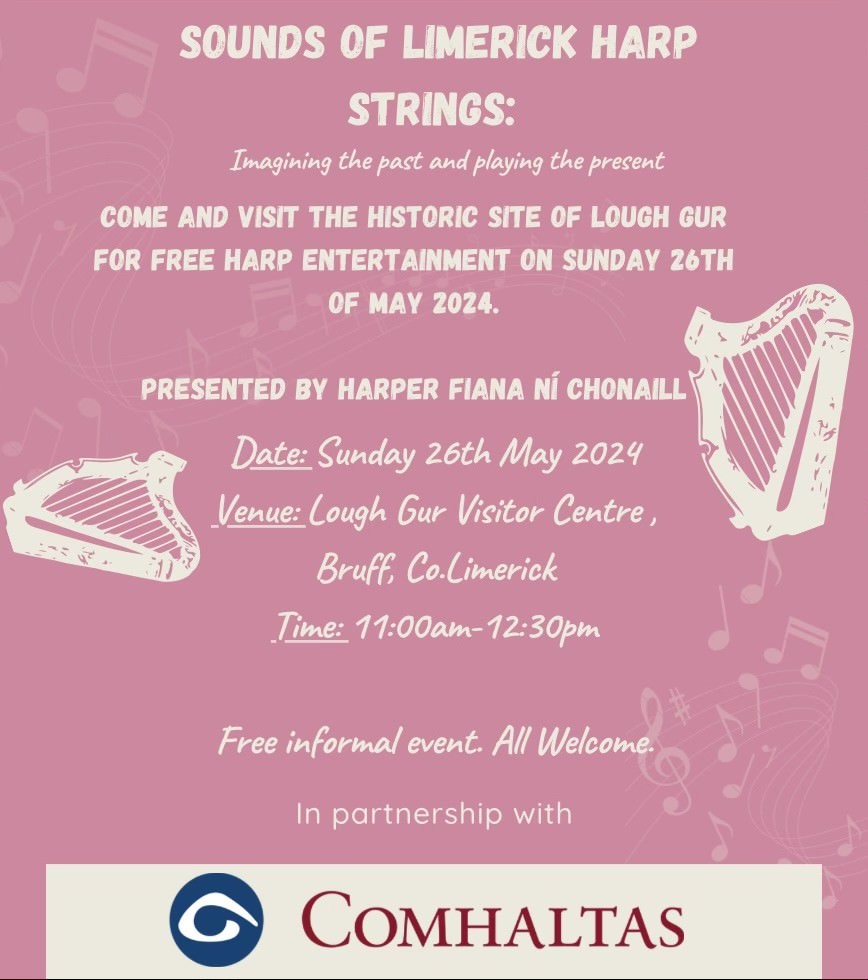
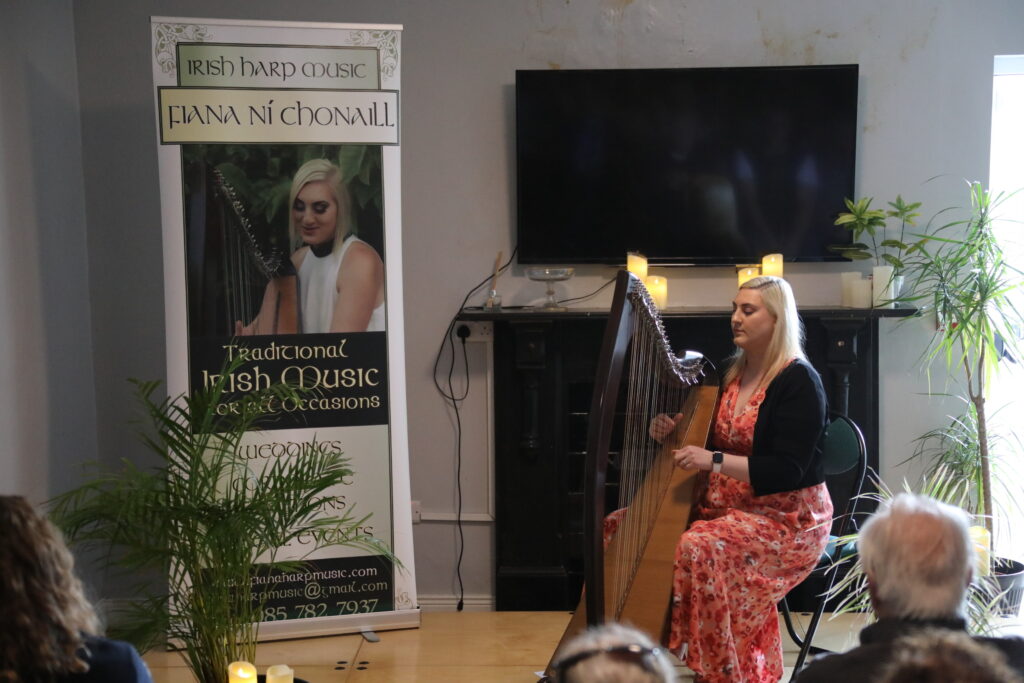
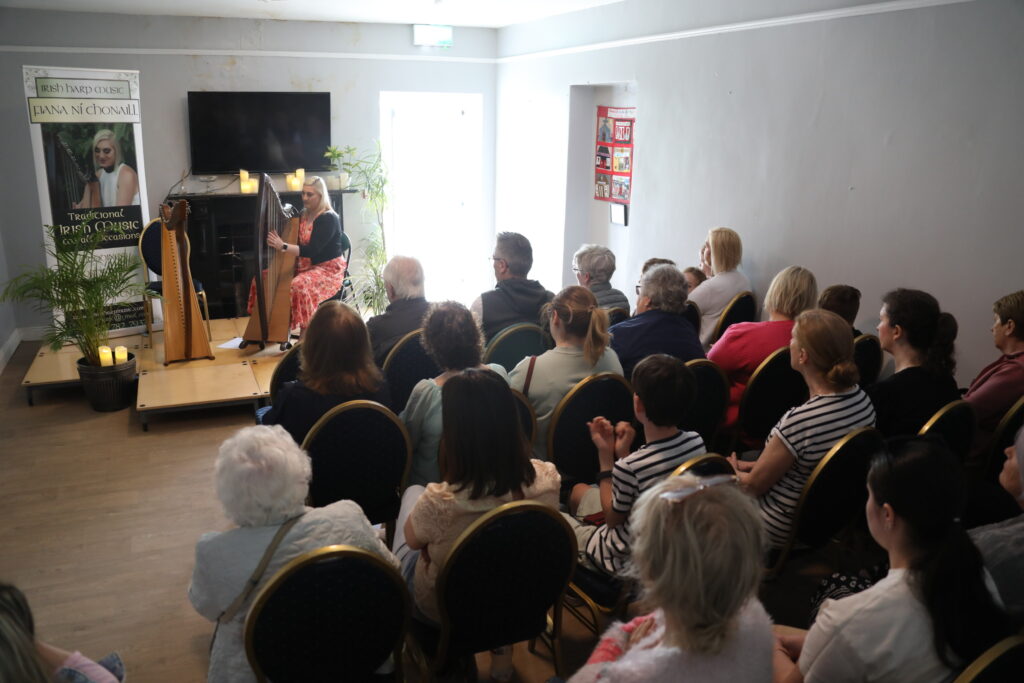
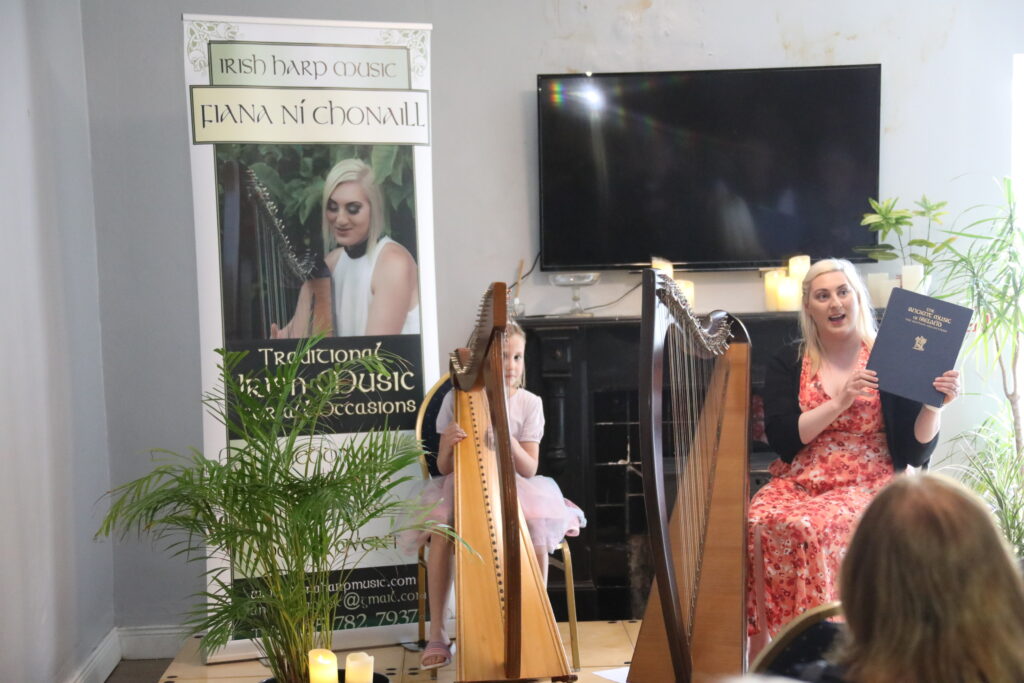
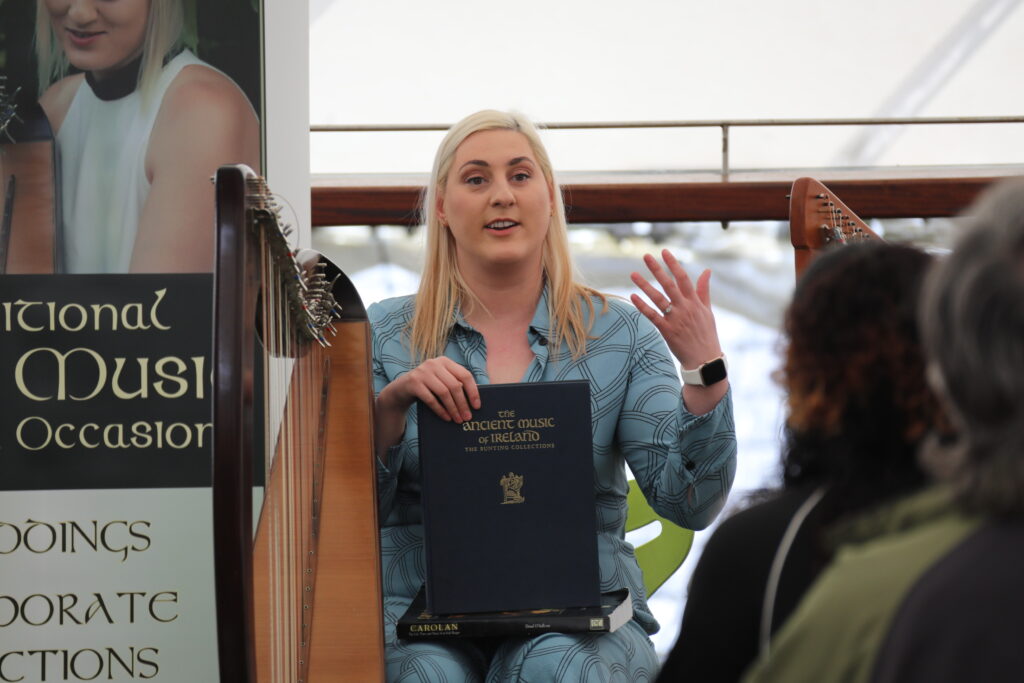
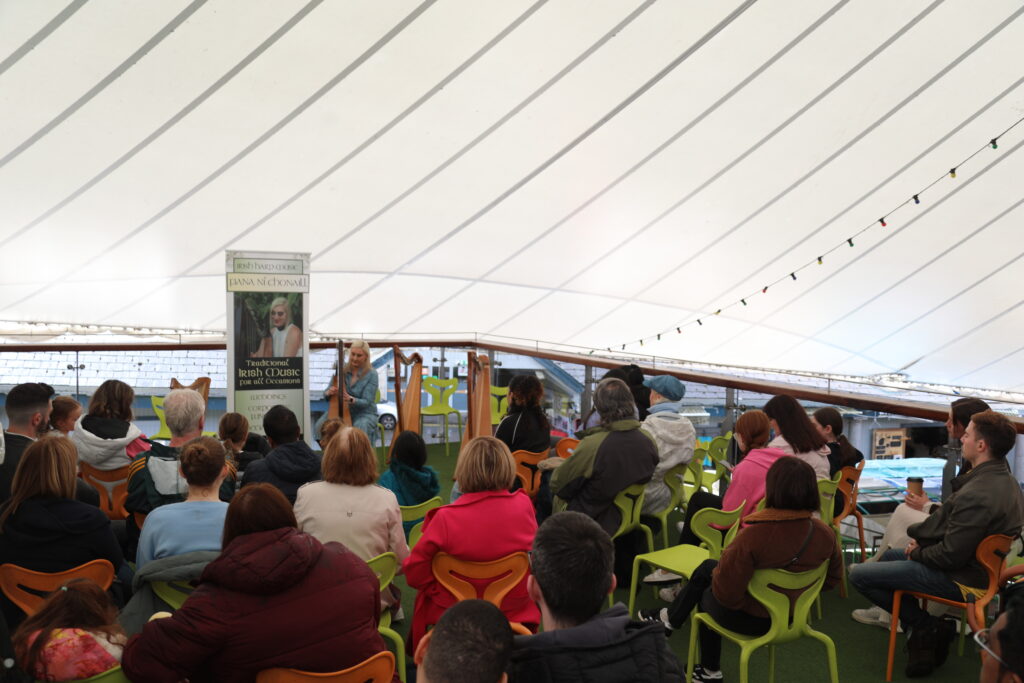
Another important motivation behind this research was finding ways to bring the history out of the archive and into everyday life. The project encompassed a series of pop-up harp recitals in community and cultural spaces, using live performance to introduce audiences to the instrument and the stories behind its music.
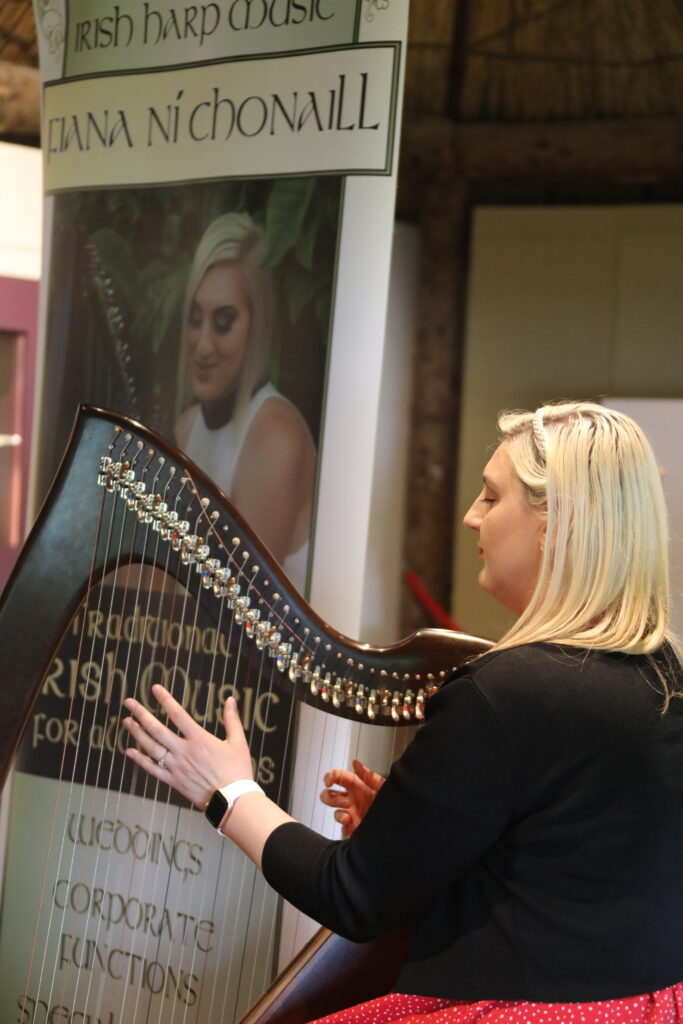
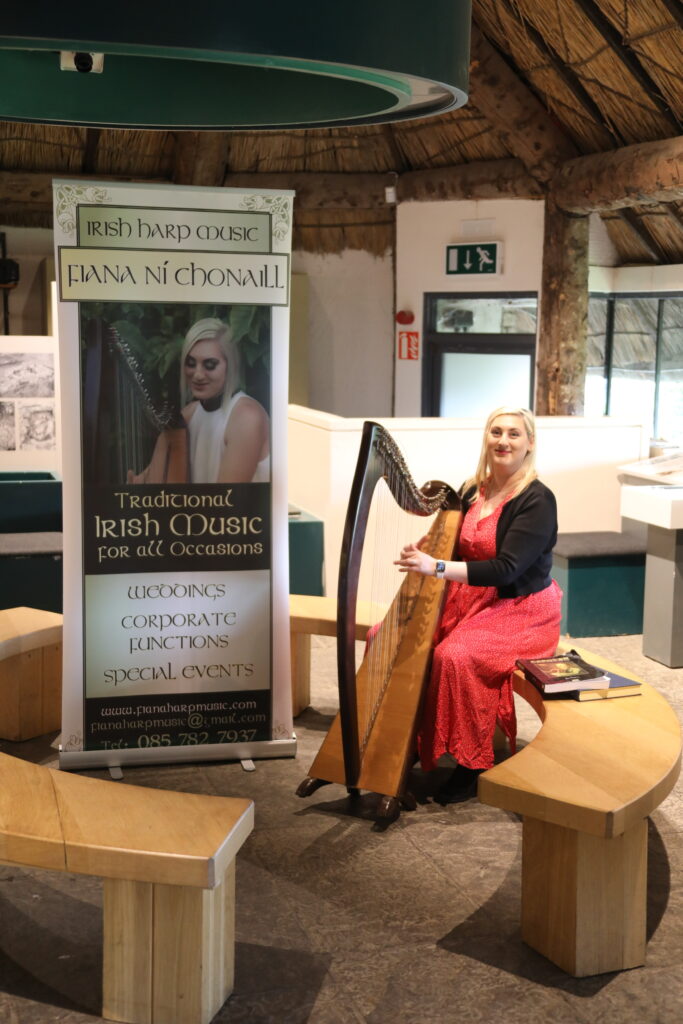
The idea was simple: if people rarely encounter the harp being played live, why not bring it to them?
I used the performances to share the music and discuss historical narratives, in the places that were mentioned in an archive. This allowed them to becomes part of a living story. This community-focused approach reflected the importance of making cultural research accessible to people who may not have a background in traditional Irish music. Limerick’s harping heritage belongs not only to historians and musicians, but to the people who live here and to anyone interested in discovering more about Ireland’s musical past.
Events